The Politics of Display: How Roma Art Enters the Mainstream Gallery System
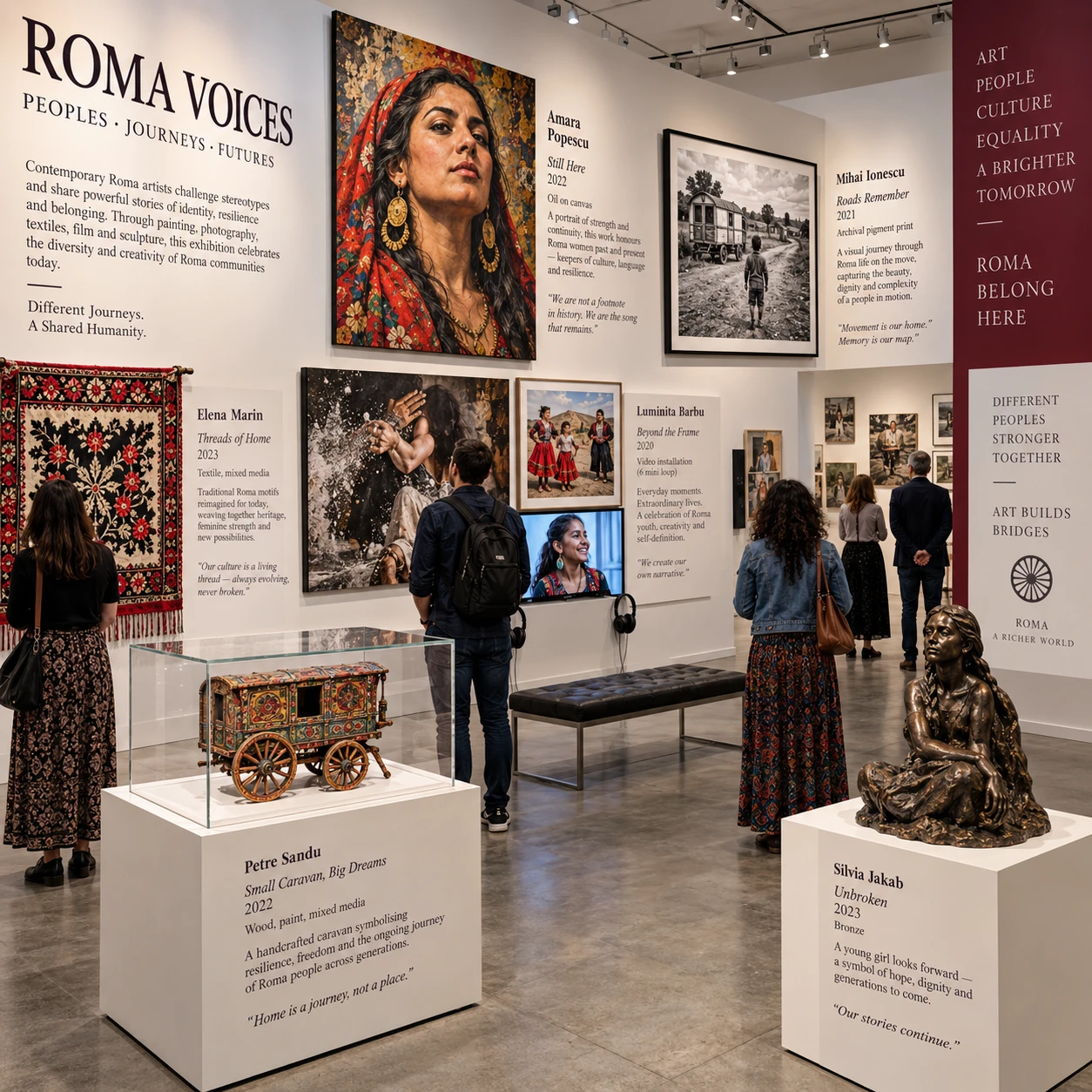
When Roma art enters a mainstream gallery, the work arrives within a system that already shapes how visitors see it. Selection, placement, labels, and accompanying stories all affect whether an artwork is encountered on its own terms or interpreted through assumptions about Roma cultural identity.
That makes display a question of power as well as presentation. Visibility can create opportunities, but meaningful inclusion also depends on who makes decisions, whose interpretation is heard, and whether Roma artists have room to define their own work.
What “Display” Means in the Art World
Display means more than placing an artwork in a gallery; it includes the choices that guide how people encounter and interpret it. Selection, location, lighting, labels, and exhibition texts can all influence the meaning visitors take away.
A painting positioned beside historical documents, for example, may be read as evidence of a particular past. The same work shown alongside contemporary artists may invite different questions about form, material, or current experience. Neither arrangement is neutral: each builds a relationship between artworks and proposes a way to understand them.
Labels matter, too. A short biography can give useful context, but a label that identifies an artist only by Roma heritage may lead visitors to treat identity as the work’s sole explanation. Conversely, omitting relevant context can make an artist’s perspective harder to recognize. The task is not to avoid interpretation, but to make it specific, accurate, and open to complexity.
For Roma art, these choices can determine whether visitors meet individual artists and distinct practices or encounter a broad category presented as self-explanatory. Curatorial framing is therefore part of the artwork’s public life, even though it does not replace the artist’s own intentions.
Visibility and the Roma Art Context
Exhibition visibility gives Roma artists opportunities to reach audiences, institutions, and professional networks, while meaningful representation requires more than a place on the wall. The way an exhibition is organized affects whether artists are treated as participants in contemporary art or confined to a single identity-based frame.
Roma artists work across varied forms, subjects, and approaches. Their work may engage with personal experience, family, politics, memory, abstraction, material experimentation, or themes with no direct reference to Roma identity. There is no single style or shared visual language that can stand for all Roma art.
This diversity matters because underrepresentation and simplification can operate together. An exhibition may increase visibility yet still narrow interpretation if it selects artists only when their work fits familiar expectations. A visitor then sees more Roma artists, but not necessarily a fuller range of their practices.
A useful way to assess inclusion is to ask three questions: Who is visible? What does the exhibition say about the work? And who has authority to shape that account? These questions distinguish visibility from sustained recognition, which includes repeat opportunities, thoughtful interpretation, and room for artists to develop on their own terms.
Who Frames the Work?
Curators, galleries, and cultural institutions frame Roma art through their choices about selection, interpretation, and presentation. Their decisions can open space for artists’ perspectives, but they can also reproduce institutional assumptions about which stories are legible or worth showing.
Institutional gatekeeping often happens through ordinary processes: who receives an invitation, which proposals get funding, how an exhibition is described, and which artists are included in collections or public programs. These decisions may be made without an explicit intention to exclude. Their cumulative effect still influences who gains access to audiences and professional recognition.
Curatorial framing includes the exhibition title, the sequence of works, the text on the wall, and the conversations around the show. If Roma identity is emphasized, the framing should explain why it matters to the artists or exhibition rather than treating heritage as a complete interpretation. If it is not emphasized, the institution should avoid implying that identity is irrelevant whenever it complicates a familiar narrative.
Collaboration can improve this process. Curators can involve artists in reviewing labels, discuss how biographical details will be used, and make space for disagreement about interpretation. Artist input does not mean surrendering curatorial responsibility. It means recognizing that a gallery’s authority to interpret is not the same as ownership of an artist’s story.
Beyond Stereotypes and Tokenism
Galleries avoid tokenistic representation by presenting Roma artists as distinct practitioners and giving their work context beyond a single cultural label. A small number of works can still be thoughtful, but inclusion becomes tokenistic when presence substitutes for engagement.
One risk is selecting art to satisfy a narrow expectation: that Roma work should always address exclusion, mobility, tradition, or community in a particular way. These subjects may be important to an artist, but they should not become entry requirements. Artists should be able to make work about any subject, in any medium, without having to explain how it represents a whole people.
Another risk is treating one artist as a spokesperson for diverse Roma communities. A single exhibition cannot represent everyone, and no individual artist should be asked to carry that burden. Better interpretation names the limits of the exhibition and identifies whose perspectives are included, without presenting them as a complete account.
- Ask before labeling: Confirm how artists describe their identity and practice.
- Read the work closely: Explain its materials, choices, and concerns rather than relying on biography alone.
- Show range: Include different media, generations, and artistic questions when the exhibition’s scope allows.
- Avoid the spokesperson trap: Do not ask one participant to speak for all Roma artists or communities.
These practices cannot remove every tension. A focused exhibition may need a clear theme, while a broad survey may risk flattening differences. The answer is transparent framing: tell visitors what the exhibition is and what it cannot claim to represent.
Roma-Led Platforms and New Curatorial Possibilities
Roma-led platforms can give artists greater influence over how Roma art is selected, presented, and discussed. The Roma Art Biennale is relevant because it creates a space for Roma-led cultural expression and can broaden the narratives through which audiences encounter artists and their work.
Such platforms can shift the starting point of an exhibition. Instead of asking only how Roma art fits an established gallery framework, organizers can develop questions, partnerships, and presentation methods grounded in artists’ own priorities. That does not mean every Roma-led initiative will share the same aims. Their value lies in the opportunity to make choices from within varied Roma cultural and artistic contexts.
These initiatives can also support connections among artists, curators, and audiences that continue beyond a single show. Their influence is strongest when they have resources, decision-making authority, and pathways into wider exhibition networks. A biennale or independent platform may expand visibility, but it cannot by itself change every institutional practice that shapes long-term recognition.
For mainstream galleries, partnership should involve more than borrowing a platform’s credibility. Fair collaboration means agreeing on roles, credit, budgets, interpretation, and how work will be used after the exhibition closes. Roma-led expertise should shape the project, not simply endorse decisions already made.
Toward More Thoughtful Gallery Practices
Thoughtful gallery practice starts with shared decision-making, accurate context, and ongoing commitment to Roma artists. These principles help institutions move from one-time visibility toward more meaningful inclusion in exhibitions, collections, and public programs.
Before an exhibition opens, curators can map how decisions will be made: who selects the work, who drafts labels, who approves translations, and who can request changes. This simple process makes responsibility visible and gives artists a clear route to raise concerns.
During installation, galleries should consider how placement shapes comparison and whether the exhibition invites visitors to look closely rather than search for a single cultural explanation. Public programs can add depth if Roma artists and speakers are paid for their expertise and introduced as individuals, not as representatives expected to answer every question.
After closing, institutions can review what happened: Which artists were invited to future projects? Did the interpretation reflect the artists’ input? Did the gallery maintain relationships beyond the event? The review should look at actions and resources, not just visitor numbers or positive feedback.
Sustained inclusion takes time and institutional effort. A temporary exhibition can open a door, but lasting change depends on continued opportunities, fair collaboration, and willingness to revise familiar curatorial habits.
Frequently Asked Questions
What does curatorial framing mean?
Curatorial framing is the way an exhibition’s selection, layout, labels, and interpretive materials guide how visitors understand artworks. It can provide context while also shaping which meanings receive attention.
How can galleries avoid tokenistic representation?
Galleries can avoid tokenism by showing artists as individuals, consulting them about interpretation, and including a range of practices rather than expecting one artist or artwork to represent all Roma people. They should also support continued opportunities beyond a single exhibition.
What role can Roma-led art initiatives play?
Roma-led initiatives can create opportunities for artists to influence exhibition narratives, connect with audiences, and develop curatorial approaches grounded in Roma perspectives. Their impact depends on meaningful authority, resources, and partnerships that respect their expertise.
How can visitors engage thoughtfully with Roma art?
Visitors can begin by looking closely at the artwork before assuming what it means, then use labels and artist statements as context rather than as complete explanations. Avoid treating one work or artist as representative of every Roma experience, and remain open to interpretations that do not match familiar expectations.