Decolonizing Art Spaces: The Roma Biennale as a Case Study
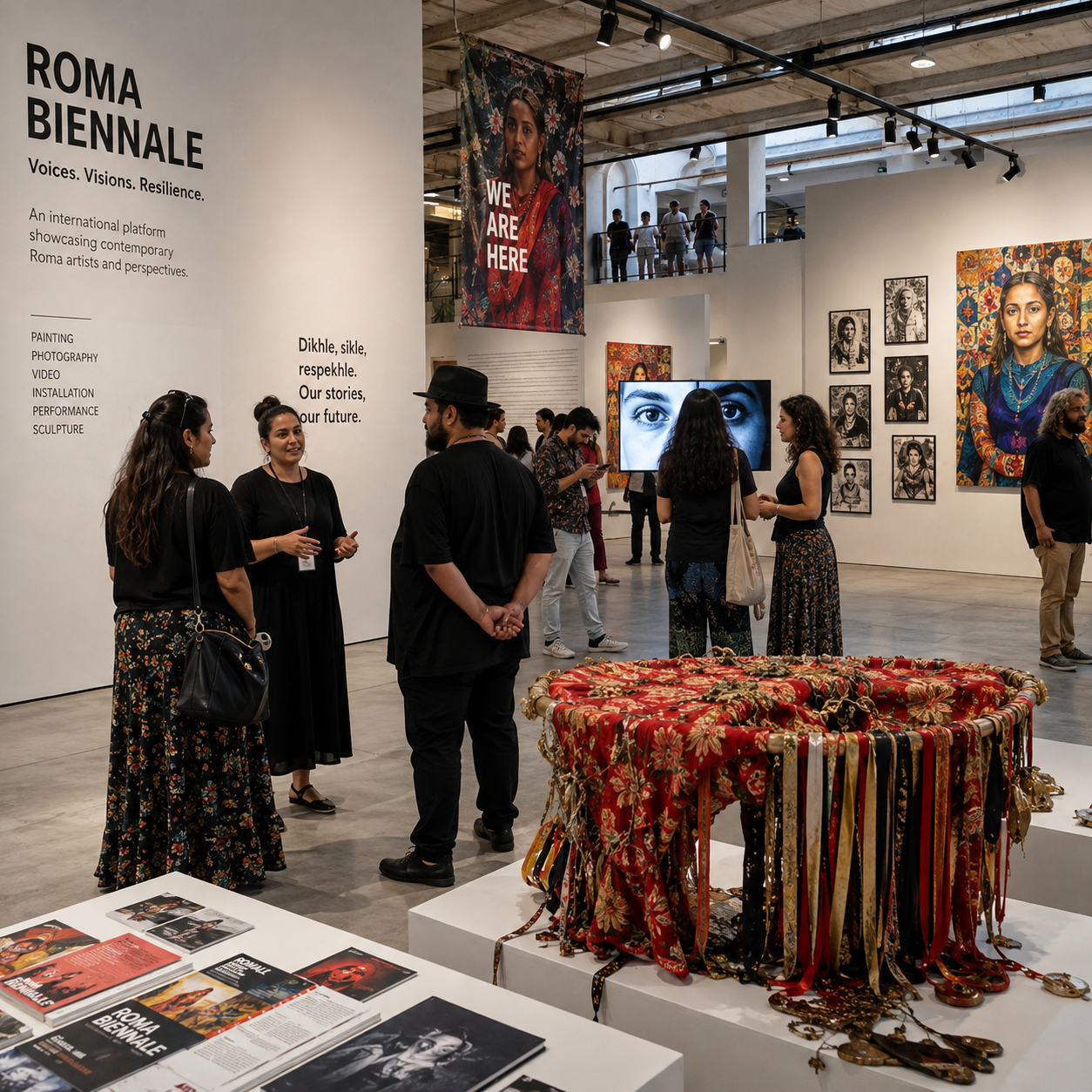
Who has the authority to tell a community’s story? In contemporary art, that question reaches beyond exhibition labels or artist selection. It concerns funding, ownership, interpretation, access, and the institutional habits that decide which histories appear important. The Roma Biennale offers a valuable case study because it places Roma art and Roma artistic agency at the center of debates about cultural representation.
Decolonizing art spaces requires more than adding underrepresented artists to an existing program. It asks institutions to examine how cultural power operates: who sets the agenda, who controls resources, whose knowledge shapes interpretation, and who benefits from visibility. Viewed through that lens, the Roma Biennale helps connect artistic practice with broader questions of participation, self-representation, and institutional responsibility.
What Does It Mean to Decolonize an Art Space?
Decolonizing an art space means changing who holds cultural authority, how knowledge is presented, and who can participate in the institution. It addresses representation, access, decision-making, and the unequal systems that have historically shaped museums, galleries, and biennales.
The term does not describe a single curatorial style. It refers to an ongoing process of questioning inherited hierarchies. A decolonial art space may reconsider whose archives count, how artists are contextualized, which languages appear in public materials, and whether communities have meaningful influence over programming.
In the context of Roma art, this matters because Roma people have often been represented through external categories: folklore, poverty, mobility, criminality, or social exclusion. Those frames can flatten the diversity of Roma communities across Europe and beyond. They may also position Roma culture as an object of study rather than a living field of artistic production.
Decolonization and inclusion overlap, but they are not identical. Inclusion can mean opening an existing institution to more people. Decolonization goes further by examining whether the institution’s rules, language, collections, and funding structures were designed around a narrow cultural authority in the first place.
Why the Roma Biennale Matters in Contemporary Art
The Roma Biennale matters because it creates a platform where Roma artistic voices can shape the cultural conversation rather than appear only as subjects within someone else’s narrative. Its significance extends beyond one event: it demonstrates how a biennale can connect artistic visibility with cultural agency.
Large-scale art events often influence which artists receive international attention and which themes enter mainstream debate. A Roma-centered biennale therefore intervenes in a field where Roma artists have frequently been overlooked, categorized narrowly, or presented through institutional interpretations formed without Roma leadership.
The case study is especially useful because Roma identity is not uniform. Roma communities include different histories, languages, religious traditions, national experiences, genders, generations, and artistic approaches. A responsible platform must make room for that internal plurality instead of presenting a single symbolic image of Roma culture.
That principle changes the role of the exhibition. Roma art can include painting, photography, film, installation, performance, sound, digital media, social practice, and research-based work. The work may address memory and migration, but it may also explore abstraction, technology, ecology, sexuality, urban life, humor, labor, or formal experimentation. The Roma Biennale helps make this breadth visible.
Moving from Representation to Self-Representation
Self-representation gives Roma artists and cultural producers greater authority to define their own experiences, histories, and futures. Representation by others can be informative, but it becomes limiting when outside institutions control the story and repeat familiar stereotypes.
The difference is not simply who appears in an exhibition. It is who frames the meaning. A Roma artist deciding how to approach family memory, displacement, or cultural identity may reject the expectations placed on work made about Roma communities by non-Roma institutions. The result can be more complex, contradictory, and artistically open.
Self-representation also resists the pressure to perform authenticity. Artists should not have to produce recognizable cultural symbols to prove their relevance. A contemporary Roma artist may draw on inherited traditions, critique them, ignore them, or combine them with global visual languages. Curatorial practice becomes stronger when it allows these choices rather than demanding a single version of cultural legibility.
This shift also affects historical framing. Roma histories are often discussed through persecution and exclusion, including the genocide of Roma and Sinti under Nazism, while Roma creativity and political thought receive less attention. These histories must be acknowledged, but they should not become the only frame. Cultural representation becomes more accurate when it holds trauma, resistance, ordinary life, achievement, disagreement, and imagination together.
Rethinking Curatorial and Institutional Power
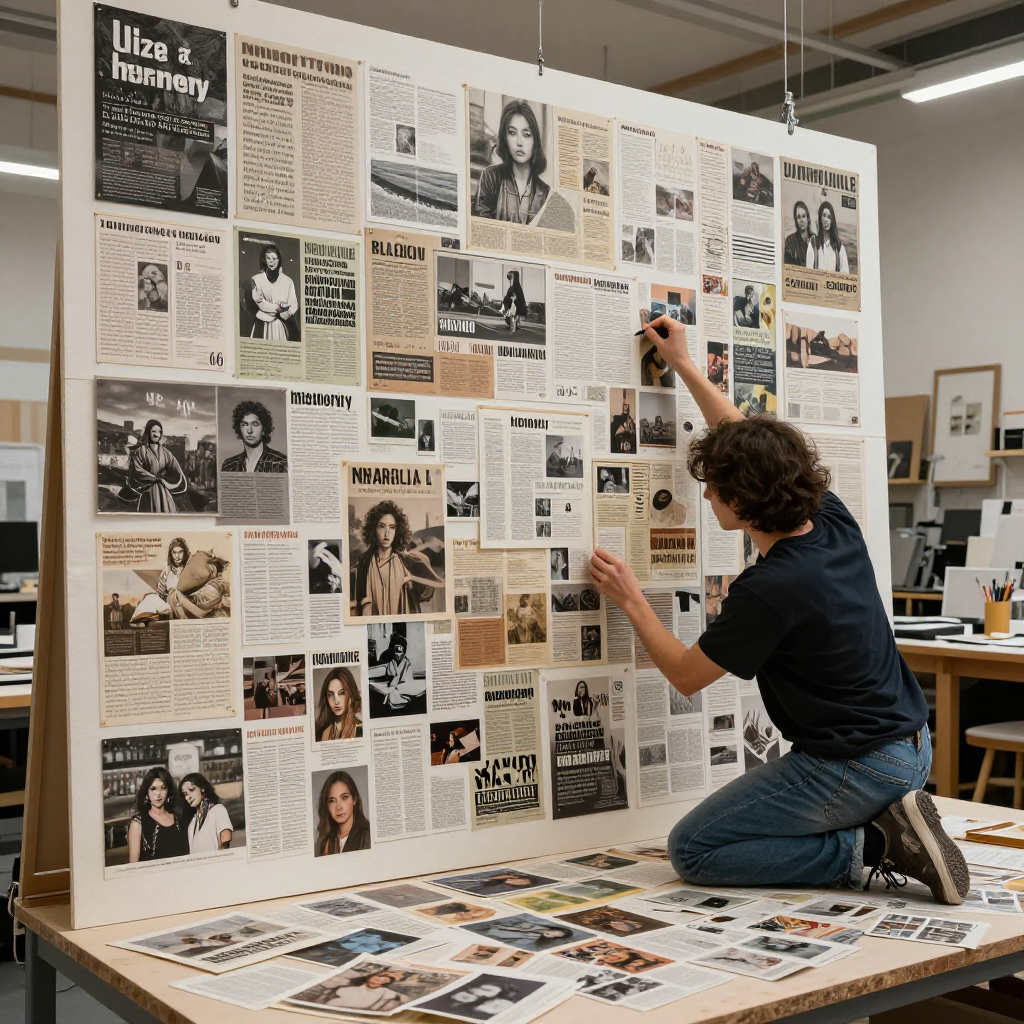
Decolonial curatorial practice asks institutions to share authority over selection, interpretation, resources, and long-term strategy. The central question is not only which artists are shown, but who makes the decisions that determine what the exhibition means.
A biennale can examine its power through four practical questions:
- Agenda: Who identifies the themes, and whose concerns are treated as urgent?
- Selection: Who chooses artists, and are Roma artists involved in those decisions?
- Interpretation: Who writes labels, commissions criticism, translates materials, and controls historical context?
- Resources: Who receives fees, production support, travel assistance, visibility, and future professional opportunities?
These questions expose a common weakness in symbolic diversity. An institution may present Roma artists while retaining complete control over the exhibition’s language and budget. That can produce visibility without a meaningful transfer of power.
A stronger model could include Roma curators, advisors, producers, researchers, educators, translators, and administrators at decision-making levels. It could also publish transparent criteria for selection and compensate community expertise. Partnership matters, but partnership should not become a substitute for shared authority.
There are trade-offs. Shared decision-making can take longer and may create disagreement. Yet disagreement can reveal assumptions that a fast, centralized process would leave unexamined. Institutions choosing consultation for speed may gain efficiency while losing trust and nuance.
Participation, Access, and the Public Role of the Biennale
Participatory art makes communities active contributors to cultural production rather than treating them only as subjects, visitors, or audiences. For a Roma Biennale, participation can involve co-creation, public discussion, education, archiving, and community-led programming.
Participation must be designed carefully. Inviting people to share personal stories without paying them, protecting their privacy, or giving them influence can reproduce extraction. A workshop is not automatically empowering because it is informal or community-based.
More accountable participation begins with clear agreements:
- Explain how stories, images, and recordings will be used.
- Pay contributors and recognize non-artistic labor.
- Offer accessible formats, including translation, captioning, and step-free access where possible.
- Schedule activities around community needs rather than institutional convenience alone.
- Allow participants to challenge, revise, or withdraw material when ethical concerns arise.
Public programming can also widen the meaning of an art space. Talks, performances, reading groups, schools projects, and neighborhood events can connect the biennale to Roma and non-Roma publics without reducing the event to outreach. The goal is a reciprocal relationship in which audiences bring knowledge, questions, and criticism into the institution.
Lessons the Roma Biennale Offers Other Art Institutions
The Roma Biennale offers institutions a practical framework: share authority, fund self-representation, widen interpretation, and measure relationships rather than attendance alone. Museums, galleries, and biennales can adapt these principles without copying the event’s identity or program.
1. Change governance before changing the poster
Include Roma professionals in boards, curatorial teams, paid advisory groups, and senior planning roles. A diverse publicity image cannot compensate for an unchanged decision-making structure.
2. Treat cultural knowledge as expertise
Community historians, artists, translators, educators, and organizers should receive professional recognition and fair payment. Their contribution belongs in the institution’s intellectual infrastructure, not only in a one-off consultation.
3. Build interpretation with, not merely about, communities
Exhibition texts should avoid exoticizing language and simplistic explanations. Invite artists and community partners to review context, but preserve room for artistic ambiguity and disagreement.
4. Fund continuity
Production grants, residencies, acquisitions, commissions, and professional development can create opportunities beyond the exhibition period. Institutions should track who receives these resources and whether relationships continue after the closing date.
5. Evaluate power, not just numbers
Attendance figures matter, but they cannot show whether an institution became more accountable. Useful evaluation asks who made decisions, who was paid, which partnerships lasted, and how artists and participants assessed the process.
This framework avoids a familiar mistake: treating cultural inclusion as a finished checklist. Institutions may improve access while leaving ownership, collections, hiring, and interpretation untouched. The Roma Biennale is most instructive when it prompts structural questions rather than a superficial replication of its name or format.
The Continuing Challenges of Decolonizing Art Spaces
No single biennale can decolonize an entire institution or art system. Decolonization requires sustained accountability, reliable resources, and changes that remain in place after the exhibition closes.
Short-term projects face predictable pressures. Institutions may seek a visible diversity initiative without changing procurement, staffing, collecting policies, or leadership. Roma artists may also face the burden of representing an entire people, while non-Roma staff are allowed to work without carrying that collective expectation.
There are difficult questions about institutional legitimacy as well. Who has the right to use the language of decolonization? How should an institution respond when Roma partners disagree with one another? Which differences reflect genuine pluralism, and which reflect unequal access to funding or authority?
A credible process makes these tensions visible. It sets goals, publishes responsibilities, pays contributors, documents decisions, and creates routes for criticism. It also accepts that some institutional habits will need to change slowly, while others require immediate action, especially where discrimination or exploitation is involved.
The Roma Biennale therefore functions less as a final model than as a pressure point. It asks the wider art world to reconsider whose creativity is recognized, whose knowledge is trusted, and how cultural power is distributed. Decolonizing art spaces is ongoing work. Its success depends on whether institutions are prepared to share control long after the public attention surrounding a biennale has moved elsewhere.
Frequently Asked Questions
What does decolonizing an art space mean?
Decolonizing an art space means examining and changing the systems that control cultural authority, representation, access, interpretation, and resources. It includes programming, but also governance, staffing, collections, language, and accountability.
Why is the Roma Biennale an important case study?
The Roma Biennale is an important case study because it centers Roma artistic voices and highlights questions about who represents Roma communities, who makes curatorial decisions, and how contemporary Roma art enters wider cultural debates.
How does self-representation differ from representation by others?
Self-representation gives people greater authority over how their histories, identities, and experiences are framed. Representation by others may still have value, but it becomes limiting when outside institutions control the narrative without meaningful collaboration or accountability.
What can museums learn from the Roma Biennale?
Museums can learn to involve Roma artists and cultural producers in governance, selection, interpretation, education, and evaluation. They can also provide fair payment, long-term funding, accessible programming, and transparent decision-making.
Is one biennale enough to decolonize an institution?
No. One biennale can create visibility and open important conversations, but lasting change requires institutional reform, sustained relationships, resource redistribution, and regular evaluation beyond a single exhibition.