Digital Activism and Roma Artists in the Age of Social Media
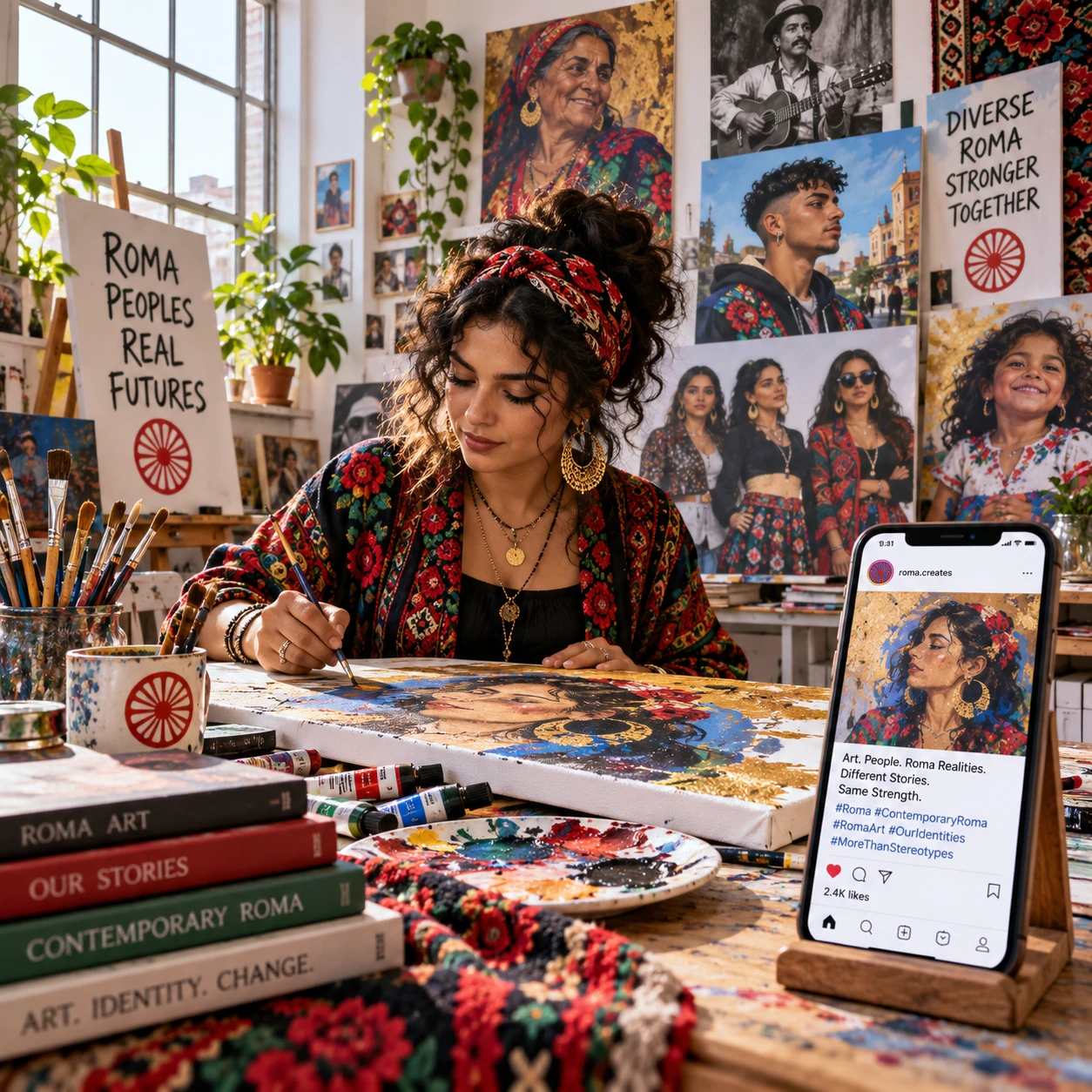
For Roma artists, social media can provide a direct route to share work, speak in their own voices, and reach audiences beyond the institutions that have traditionally shaped public representation. A painting, short film, photograph, or personal account can travel online alongside the artist’s own context.
That visibility matters, but it is not a simple fix for exclusion or discrimination. Roma communities and artists are diverse, and online platforms bring both possibilities and risks. Their value lies in how artists use them: as tools for creative expression, connection, and advocacy, often in dialogue with cultural spaces such as the Roma Art Biennale.
Why digital visibility matters for Roma artists
Digital visibility gives Roma artists more ways to present their work and perspectives, especially when mainstream cultural coverage or institutions offer limited representation. It can help audiences encounter Roma creativity on artists’ own terms, though visibility alone cannot remove structural barriers.
For generations, public images of Roma people have often been shaped by stereotypes, outsider narratives, or narrow ideas of cultural identity. These portrayals can leave little room for the breadth of contemporary Roma life and artistic practice. Social media allows artists to publish work directly, explain its context, and decide which aspects of their experience they want to share.
A digital portfolio can also help artists document exhibitions, develop professional relationships, and make work discoverable to curators, journalists, and potential collaborators. The format matters: a single image may invite attention, while a caption, interview, or series of posts can add history and nuance. Artists should not have to represent an entire community to be seen as credible. Self-representation means having agency over one’s own story, not accepting the burden of speaking for everyone.
Social media as a space for artistic expression
Social media gives Roma artists flexible formats for sharing visual storytelling, process, and personal perspective. Images, video, audio, and written posts can each reveal a different part of an artwork or the ideas behind it.
A painter might post a finished work beside a short studio video. A photographer could pair portraits with reflections on consent and the relationship between artist and subject. A filmmaker might share a brief excerpt, then use a longer caption to describe the choices behind it. These approaches make the creative process visible without requiring every artwork to explain itself in full.
Platforms also influence how work is encountered. A quick-scroll feed favors immediate visual impact; a longer video or linked portfolio gives viewers more time and context. Artists can choose formats that suit the work, while recognizing that each comes with trade-offs. Short posts are easy to share but can flatten meaning. Detailed explanations offer depth but may reach fewer casual viewers.
- Images and carousels can show details, series, or changes in a work over time.
- Video and audio can bring voice, movement, and performance into the frame.
- Captions and artist statements can clarify context, intention, and the questions a work raises.
- Stories and live conversations can create more informal contact with audiences, though they may be temporary or difficult to archive.
There is no single Roma artistic style or online voice. Artists may draw on family histories, local realities, experimental forms, or subjects that have little connection to identity. That range is part of the point: cultural visibility should make space for complexity rather than demand a familiar image.
From creative work to digital activism
Digital activism takes shape when artistic expression helps people question unequal representation, discrimination, or the conditions that shape public life. Art can raise awareness and open discussion, but it does not automatically produce policy change or end prejudice.
A work may challenge a stereotype through its subject, its form, or the artist’s decision to address an audience directly. A portrait can restore individuality where public narratives have relied on caricature. A short video may document an experience that is often ignored. A shared exhibition post can draw attention to a broader conversation about access to cultural institutions. In each case, creative choices carry meaning; the work need not function as a slogan to have civic force.
Online advocacy is often strongest when artists control the framing and when audiences can find reliable context. A useful post might name the issue, explain how it relates to the work, and point viewers toward further information or a relevant organization. Artists can also set boundaries: they may choose not to disclose personal experiences, respond to hostile comments, or turn every artwork into an educational resource.
Expression and advocacy can overlap without being identical. Some artists make explicitly political work; others contribute by expanding what audiences see as Roma art. Both approaches can matter. The measure is not how often an artist posts about injustice, but whether their work and participation reflect their own aims and conditions.
Building community and connecting across borders
Social platforms can help Roma artists, audiences, and communities find one another across geographic borders. They make it easier to discover work, share opportunities, and maintain conversations that might otherwise depend on travel or local networks.
Artists may use online communities to exchange feedback, announce open calls, follow peers’ projects, or connect with cultural organizations. Audiences can encounter artists from different places and disciplines rather than relying on a small number of familiar images. These connections can support collaboration, but they do not erase differences in language, resources, or lived experience.
Community-building is also more than gathering followers. A smaller group that attends an artist talk, shares a carefully contextualized work, or returns to a conversation can be more meaningful than a large but fleeting audience. Clear moderation and respectful boundaries help keep online spaces usable, particularly when discussions touch on discrimination or identity.
Artists can make connection more intentional by crediting collaborators, adding captions or translations where practical, and asking permission before sharing another person’s image or story. These habits do not guarantee a safe or inclusive space, but they signal care and help prevent visibility from coming at someone else’s expense.
Opportunities and limits of online advocacy
Online advocacy can make Roma art easier to discover and share, but its reach depends on access, platform systems, audience behavior, and the context attached to each post. Social media should be treated as one part of cultural advocacy, not a complete solution.
Platforms can help an artist publish without waiting for a traditional gatekeeper. At the same time, recommendation systems favor some formats and topics over others, and their rules can change without warning. Internet access, device quality, time, and digital skills also affect who can participate. A strong post may still be overlooked; a widely shared post may be misunderstood or separated from the artist’s intended context.
There are personal costs, too. Public-facing artists may encounter harassment, unwanted demands to explain Roma identity, or pressure to disclose private experiences. Moderation tools, comment limits, and a clear posting schedule can help, but they cannot remove every risk. Choosing not to engage with a hostile thread is a valid boundary, not a failure of advocacy.
A practical way to assess a digital campaign is to ask three questions:
- Purpose: What should viewers understand, feel, or do after encountering the work?
- Context: Does the post explain enough to reduce misreading while leaving the artwork room to speak?
- Aftercare: Who will monitor responses, protect participants’ privacy, and preserve the material if it matters over time?
This simple check keeps attention on the people and ideas involved, rather than treating likes or shares as proof of meaningful change. Online metrics show activity, not necessarily understanding, solidarity, or long-term impact.
Linking online visibility with cultural spaces
Cultural spaces such as the Roma Art Biennale can complement social media by bringing artists, audiences, and works into shared physical and intellectual space. Digital engagement can introduce an artist or conversation; an in-person encounter can offer time for closer looking and exchange.
The relationship works in both directions. Artists can use social media to share documentation, reflections, and audience responses around cultural events, while online viewers can discover work they may later explore in person. A Biennale setting can also create opportunities for dialogue among artists and visitors that a feed cannot reproduce. These possibilities depend on each event’s actual format and resources, so it is best not to assume that every cultural initiative offers the same programs or outcomes.
For audiences, the useful habit is to follow the work beyond a single image: read the artist’s statement, look for the setting in which the work was presented, and listen to the artist’s own account where available. For organizers, clear credit, accessible event information, and thoughtful documentation can help online visibility support rather than replace the encounter with art.
The Roma Art Biennale belongs in this wider conversation because it offers a cultural context for considering Roma representation and artistic practice. Social media can extend that conversation across borders, while the art itself remains specific to the people who make it. When digital platforms and cultural spaces work alongside one another, audiences gain more ways to encounter Roma artists without reducing them to a single story.