How Roma Contemporary Art Is Rewriting the Narrative on Social Stereotypes
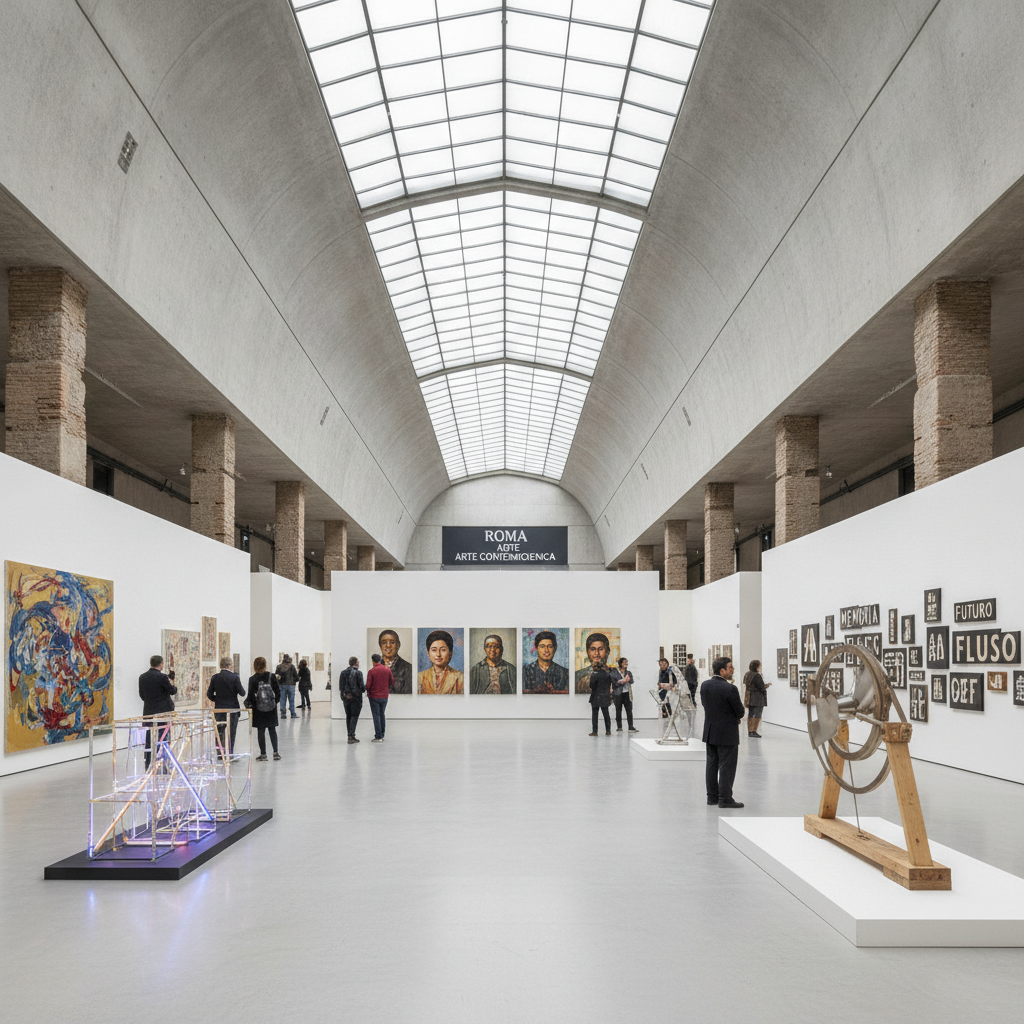
The Weight of Stereotype — What Roma Artists Are Up Against
Roma people have been defined by outsiders for centuries. From 19th-century Romantic paintings depicting them as wandering exotics to contemporary media portrayals linking Roma communities with crime and poverty, the cultural stereotypes surrounding Roma identity have been remarkably persistent — and remarkably damaging.
This is the terrain that Roma contemporary art enters. Not as decoration, but as direct confrontation.
Antigypsyism — the specific, systemic form of racism targeting Roma people — operates through imagery as much as policy. When a community is consistently depicted as lawless, backwards, or culturally inferior, those depictions shape housing decisions, school enrollment practices, and police conduct. Art doesn't exist in a vacuum separate from these realities. It either reinforces them or disrupts them.
What makes the challenge particularly sharp is the sheer breadth of the diaspora. Roma communities span from Spain to Romania, from Brazil to Canada, shaped by centuries of forced displacement, persecution, and the Holocaust — known in Romani as the Porajmos. Any honest account of Roma cultural identity must hold this diversity, refusing the flattening impulse that turns a complex, multilingual people into a single caricature.
Art as Counter-Narrative — The Power of Self-Representation
Self-representation is the act of Roma artists defining their own narratives — and it stands in direct contrast to the centuries of external depiction that has shaped public perception. The difference between being represented and representing yourself is not subtle. It determines whose experience is centered, whose pain is aestheticized, and whose future is imagined.
For generations, Roma people appeared in European art primarily as objects of fascination. Painters, writers, and composers borrowed Roma imagery to signal freedom, passion, or otherness — projecting fantasies that had little to do with lived Roma experience. The communities themselves rarely held the brush.
That has been changing. Roma artists working today are producing work that draws on personal memory, family history, political anger, and cultural pride — not as performance for a non-Roma audience, but as genuine expression. This shift in authorship changes everything about how the work functions. A painting about displacement made by someone who has experienced displacement carries a different weight than one made about displacement from the outside.
The tension here is real, though. Authentic self-representation doesn't automatically guarantee mainstream visibility. Roma artists often face a difficult choice: adapt their work to fit gallery expectations shaped by non-Roma curatorial tastes, or risk invisibility by refusing to translate their work for dominant cultural frameworks. Neither option is without cost.
The Roma Biennale and the Politics of Visibility
Dedicated cultural platforms like the Roma Biennale create legitimized, international spaces for Roma voices that mainstream institutions have historically failed to provide. The Roma Biennale, which has taken place in Berlin and other European cities, is not simply an art event — it's an institutional argument. It argues that Roma art deserves its own platform, its own critical discourse, its own audience.
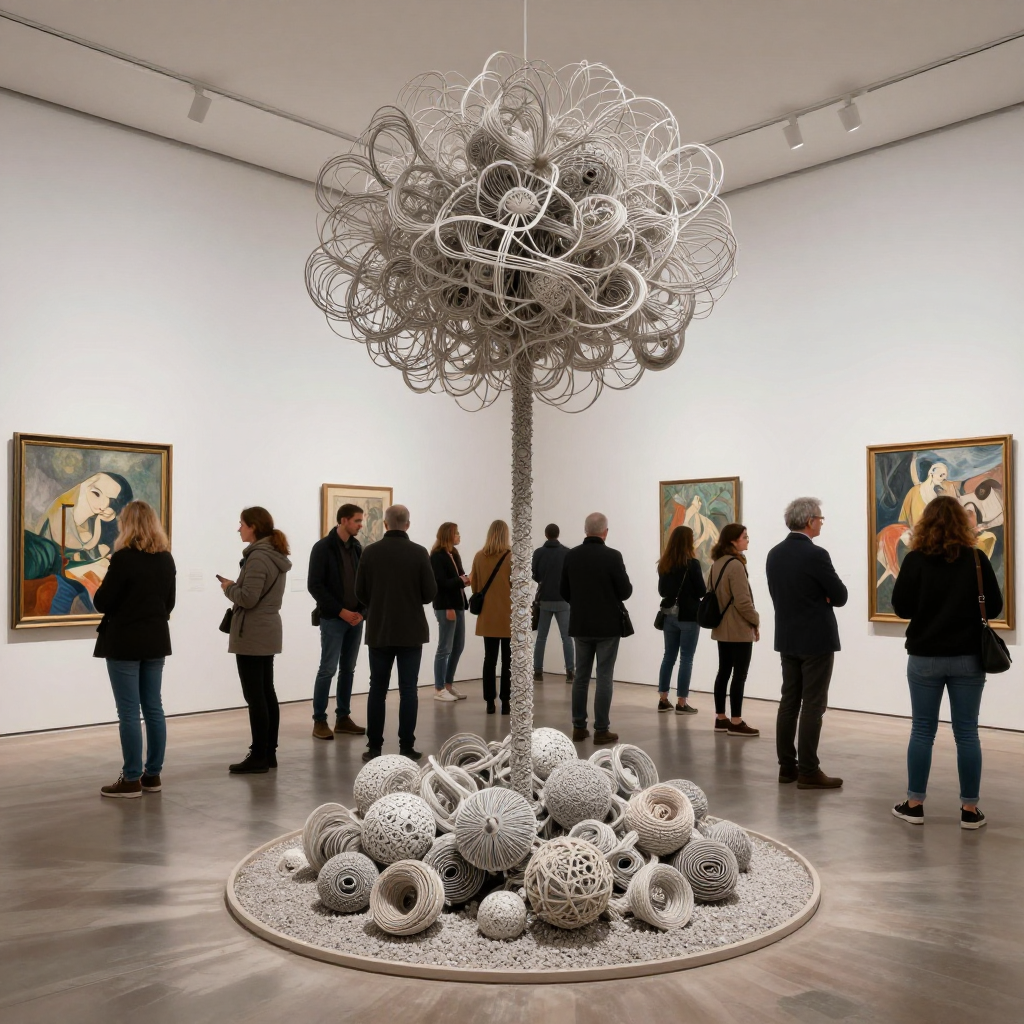
Biennales matter because they signal cultural legitimacy. When an art form or community is included in a biennale format — a structure borrowed from the most prestigious circuits of the contemporary art world — it enters a conversation that carries institutional weight. Collectors, curators, critics, and journalists pay attention. The work gets reviewed, discussed, and collected.
For Roma artists, this visibility is complicated. There's a real question about whether entering mainstream art world structures requires assimilation — whether the price of visibility is the softening of political edge. The Roma Biennale has navigated this by centering Roma curatorial voices and maintaining an explicitly political framing, refusing to let the work be absorbed into a depoliticized aesthetic category.
The broader point is that visibility without agency isn't progress. Platforms matter, but who controls them matters more.
Themes and Aesthetics — What Roma Contemporary Art Looks Like
Roma contemporary art is not a single style or movement — it is a field defined by diversity of medium, geography, and approach. What connects much of the work is not aesthetic consistency but thematic urgency.
Memory and displacement appear repeatedly, often in layered, non-linear forms. Artists working with photography, video, and installation explore what it means to carry a history of forced movement — how that history lives in the body, in language, in the objects families managed to keep. The archive, both personal and collective, becomes a recurring site of investigation.
Identity and intersectionality surface in work that refuses simplification. Roma women artists, for instance, are producing pieces that address the compounding pressures of gender, ethnicity, and class simultaneously — refusing to choose which aspect of their experience to foreground. This intersectional lens produces work of genuine complexity.
Resistance takes many forms. Some artists work in explicitly political registers — using text, appropriation, and institutional critique to challenge antigypsyism directly. Others approach resistance through affirmation, creating images of Roma life that are tender, humorous, and fully human in ways that mainstream representation rarely allows.
The mediums are as varied as the artists: textile, mural, performance, digital art, film. There is no Roma aesthetic in the sense of a unified visual language. That diversity is itself a kind of argument against the monolithic stereotypes the work seeks to dismantle.
Curatorial Choices and Who Controls the Story
The critical question of who curates Roma art — Roma or non-Roma — directly shapes public perception and the integrity of cultural discourse. Curation is not a neutral act. Every exhibition makes choices about what to include, how to frame it, what context to provide, and what narrative arc to suggest. Those choices reflect the values, blind spots, and interests of the people making them.
When Roma art is curated primarily by non-Roma institutions and individuals, the risk is that the work gets filtered through frameworks that prioritize what is legible and comfortable to dominant audiences. Work that is politically confrontational may get softened. Themes of antigypsyism may be reframed as generic social commentary. The specificity of Roma experience can dissolve into universalist messaging that strips the work of its sharpest edges.
Roma-led curatorial practice changes this dynamic. It brings insider knowledge of community context, political stakes, and artistic genealogies that outside curators simply don't have access to. It also shifts the relationship between artist and institution from one of supplication to one of collaboration or ownership.
This doesn't mean non-Roma institutions have no role. But it does mean those institutions need to be honest about the limitations of their perspective and actively create structures that transfer decision-making power to Roma voices. Consultation is not the same as control.
Impact Beyond the Gallery — Art Shifting Social Perception
Roma contemporary art is measurably influencing public discourse, though the mechanisms are gradual and uneven. The impact of art on social perception is difficult to quantify, but there are real indicators worth examining.
Media coverage of Roma communities has begun, in some European contexts, to shift — partly because Roma artists and cultural figures have become more visible public voices. When journalists covering Roma issues can reference a thriving contemporary art scene rather than defaulting to poverty narratives, the entire frame of the story changes. Art creates new entry points into a community's experience.
Policy conversations are slower to move. But cultural discourse shapes the political imagination over time. Exhibitions that draw significant attendance, generate critical reviews, and enter art historical records contribute to a slow recalibration of how Roma people are understood — not as a social problem to be managed, but as a community with a rich, complex cultural life.
The limits are real. A biennale doesn't undo housing discrimination. A powerful painting doesn't reverse school segregation. Art works at the level of perception and imagination, which matters enormously — but it works alongside political organizing, legal advocacy, and policy change, not instead of them.
The Road Ahead — Sustaining Roma Cultural Discourse
The ongoing challenge for Roma artists and institutions is sustaining momentum without losing political clarity. The art world has a well-documented tendency to absorb radical work and neutralize it — celebrating the aesthetic while quietly setting aside the critique.
Sustaining genuine Roma cultural discourse requires structural investment: funding for Roma-led arts organizations, educational pathways that don't require Roma artists to assimilate into non-Roma institutions, and critical writing that develops the intellectual framework around the work rather than simply reviewing individual shows.
It also requires honesty about internal tensions. Roma communities are not monolithic, and there are real disagreements about what authentic representation looks like, who speaks for the community, and how to navigate the relationship with mainstream cultural institutions. These tensions are generative, not problems to be solved.
The artists working in this space are doing something genuinely difficult: producing work of aesthetic ambition while carrying the weight of political necessity, navigating institutional structures that were not built for them, and refusing the twin traps of invisibility and assimilation. That work deserves sustained critical attention and structural support — not as charity, but as recognition of its cultural significance.
Frequently Asked Questions
What is Roma contemporary art and how does it differ from traditional Roma cultural expression?
Roma contemporary art refers to visual and conceptual work produced by Roma artists engaging with current artistic practices — installation, video, performance, photography, and more. It differs from traditional Roma cultural expression (music, textile, oral tradition) in its engagement with the institutional art world and its explicit dialogue with contemporary social and political issues. The two are not opposed; many Roma contemporary artists draw on traditional forms as source material or reference point.
How does the Roma Biennale support emerging Roma artists?
The Roma Biennale provides emerging Roma artists with international exhibition opportunities, critical visibility, and connection to a broader network of Roma cultural practitioners. By centering Roma curatorial voices, it creates a platform where artists don't have to translate their work for non-Roma gatekeepers. It also contributes to building an art historical record of Roma contemporary practice.
Can art alone challenge deep-rooted stereotypes about Roma communities?
Art alone cannot dismantle structural antigypsyism — but it plays a specific and irreplaceable role in shifting cultural imagination. Stereotypes persist partly because they go uncontested in public representation. Art creates visible counter-narratives that change how Roma communities are perceived and how Roma people see themselves. Its impact is real but works in combination with legal, political, and educational change.
What is antigypsyism and how does contemporary art address it?
Antigypsyism is a specific form of racism directed at Roma people, encompassing prejudice, discrimination, and social marginalization rooted in negative stereotypes. Contemporary Roma art addresses it directly — through work that names it explicitly, that documents its effects, and that insists on the full humanity of Roma people in contexts where that humanity has been systematically denied. Some artists engage it through confrontational political work; others through intimate, humanizing depictions of everyday Roma life.
How can cultural institutions better support Roma artists without appropriating their narratives?
The most important step is transferring decision-making power rather than simply providing platforms. This means funding Roma-led curatorial projects, hiring Roma staff in substantive roles, and creating advisory structures with genuine authority. Institutions should also be transparent about the limitations of their own perspective and resist the impulse to reframe Roma art in ways that make it more palatable to dominant audiences at the expense of its political specificity.