Curating the Roma Biennale: Who Gets to Represent, and Who Gets to Decide?
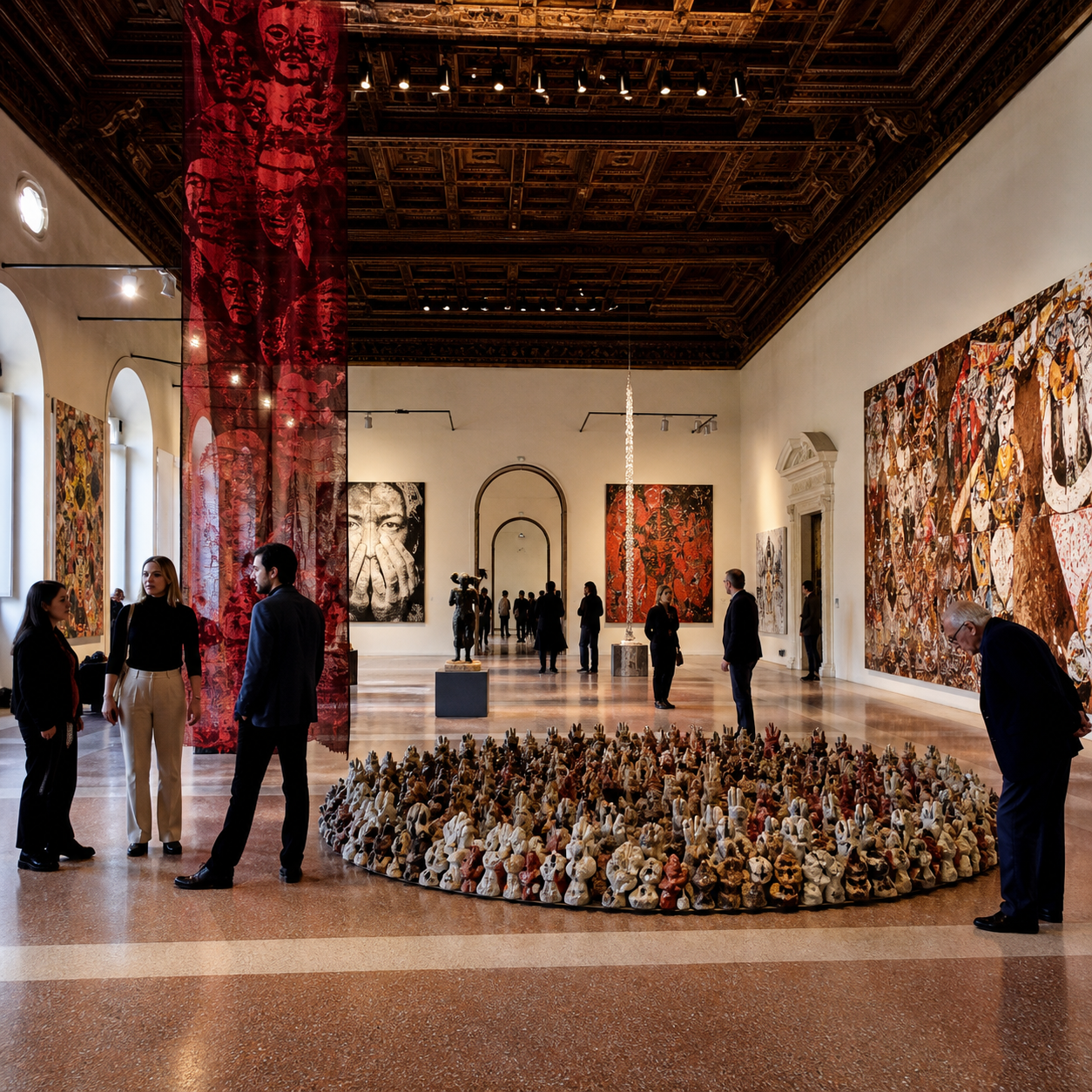
Every biennale is an argument. It argues for certain artists, certain ideas, certain ways of seeing. But when the subject is Roma cultural identity — one of Europe's most persistently misrepresented communities — the argument becomes something more charged. The Roma Biennale doesn't just present art. It contests the terms under which Roma culture has historically been seen, defined, and consumed by outsiders.
That contestation is what makes it worth examining closely, not as a social initiative, but as a serious intervention in contemporary art discourse.
What Makes the Roma Biennale a Distinct Curatorial Project
The Roma Biennale occupies a singular position in the international contemporary art landscape: it is a platform built specifically to center Roma voices, not as subject matter, but as authorial presence. This distinction matters enormously.
Most major biennales engage with questions of identity and marginalization from the outside — curators and institutions selecting work that speaks to those themes. The Roma Biennale inverts that structure. The premise is that Roma artists and curators are the primary agents shaping the event's intellectual and aesthetic direction.
This positioning aligns it with a broader shift in contemporary art toward what critics sometimes call self-determined cultural platforms — spaces where communities historically subject to external representation begin to control their own narratives. The biennale sits alongside initiatives emerging from Indigenous, Black diaspora, and postcolonial art communities, each grappling with the same fundamental question: who holds the camera, and who is merely in the frame?
What distinguishes the Roma context specifically is the depth of the representational problem it addresses. Roma people have been depicted in European visual culture for centuries — as romantic wanderers, as exotic outsiders, as objects of ethnographic curiosity. Contemporary Roma artists are working against that accumulated weight, and the biennale provides a structure in which that work can be seen on its own terms.
The Question of Authorship — Curator, Community, or Institution?
Curatorial authorship in the context of minority art platforms is never a clean, singular thing. It involves negotiation between the individual curator's vision, the community's collective interests, and the institutional frameworks that make the event possible.
In mainstream biennales, the lead curator typically functions as the primary intellectual author — their thematic framing shapes everything from artist selection to spatial arrangement. That model carries real risks when applied to culturally specific platforms. A single curatorial voice, even a Roma one, may not adequately represent the diversity within Roma communities across different countries, languages, and artistic traditions.
The more interesting curatorial approaches at events like the Roma Biennale tend to distribute authorship — building advisory structures, involving artists in programming decisions, and treating the biennale itself as a site of ongoing negotiation rather than a finished statement. This is harder to execute than it sounds. Collective decision-making takes time, creates friction, and can produce programming that lacks the sharp conceptual focus that earns critical attention.
But that friction may be precisely the point. The messiness of community-led programming is not a failure of curatorial rigor — it's evidence that multiple perspectives are actually present, not just rhetorically invoked.
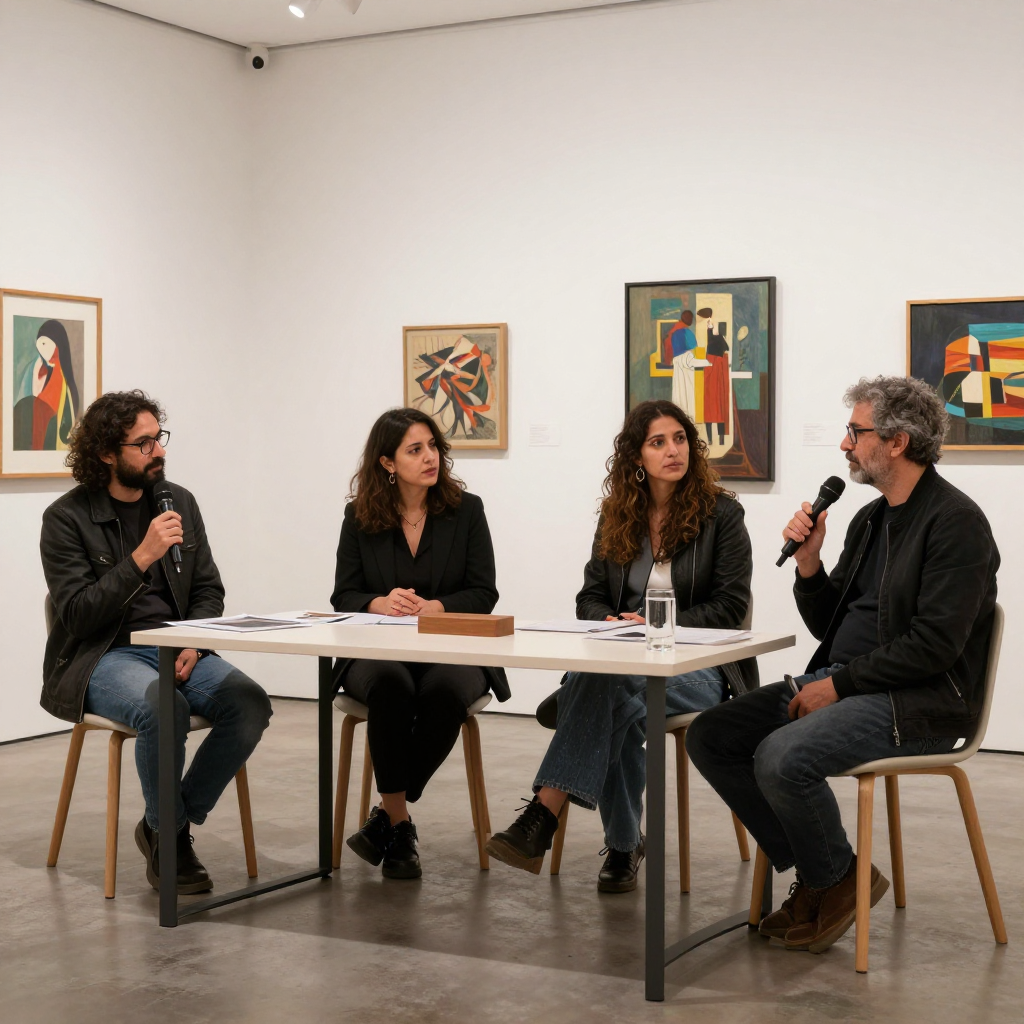
Representation Pitfalls: Authenticity vs. Accessibility
One of the sharpest tensions in curating Roma contemporary art is the gap between work that resonates deeply within Roma communities and work that communicates effectively to mainstream art audiences. These are not always the same thing, and pretending otherwise creates problems.
On one side sits the risk of over-explanation — contextualizing Roma artistic practice so heavily for outside audiences that the work itself becomes secondary to its sociological framing. This is a familiar trap in identity-focused exhibitions, and it subtly repositions the art as documentation rather than expression.
On the other side is the risk of opacity — presenting work without adequate context in ways that inadvertently exclude Roma community members who aren't already embedded in contemporary art world conventions. Accessibility isn't only about making work legible to dominant audiences; it also means ensuring that the communities the biennale claims to represent can actually participate in it.
The most effective curatorial strategies tend to resist the binary entirely. Rather than choosing between insider resonance and outsider legibility, they create layered entry points — work that can be encountered on multiple levels, with different kinds of knowledge enriching but not gatekeeping the experience. That's a high bar, and not every edition of any biennale clears it.
Decolonial Curation as a Framework
Decolonial curation offers a useful analytical lens for understanding what the Roma Biennale is attempting — and where that attempt gets complicated. At its core, decolonial curatorial practice involves questioning the inherited structures through which art is validated, exhibited, and interpreted.
For Roma cultural production, those structures have historically been shaped by Gadjo (non-Roma) institutions, scholars, and curators who determined what counted as art versus craft, what qualified as cultural heritage versus contemporary practice, and which Roma voices were legible enough to be amplified. Decolonial curation pushes back against those determinations by centering community epistemologies — ways of knowing and making that don't require external validation to be legitimate.
In practice, this might mean programming work that doesn't conform to dominant art world aesthetics, inviting curators who bring community knowledge rather than institutional credentials, or structuring events in ways that prioritize Roma audience engagement over critical press coverage. Each of these choices involves trade-offs. Prioritizing community knowledge over institutional credentials can limit critical visibility; resisting dominant aesthetics can restrict funding access.
Decolonial curation isn't a solution to these tensions — it's a framework for naming them honestly and making intentional choices about which compromises are acceptable. The decolonial turn in cultural theory has generated rich debate about exactly these trade-offs across multiple disciplines.
Navigating Institutional Structures Without Losing Cultural Sovereignty
Roma-centered cultural events operate within art world institutions that were not built with them in mind — and that dependence creates real vulnerabilities. Funding structures, venue relationships, and press ecosystems all carry implicit expectations that can gradually reshape a platform's priorities.
This is not a problem unique to the Roma Biennale. Any culturally specific platform that seeks broader visibility must negotiate with institutions whose values and incentive structures don't fully align with its own. The question is how to do that without allowing institutional logic to colonize the event's core purpose.
Several strategies have emerged across comparable platforms. One involves maintaining explicit governance structures that keep decision-making authority within the community regardless of where funding originates. Another involves building alternative funding relationships — foundations, diaspora networks, community organizations — that reduce dependence on any single institutional patron. A third, less discussed but equally important, involves being willing to say no: declining partnerships, venues, or funding opportunities that would require compromising the platform's cultural sovereignty.
That last strategy has costs. Saying no to institutional resources means operating with less — less money, less visibility, less access to mainstream critical infrastructure. For a biennale trying to establish artistic legitimacy in a competitive international landscape, those costs are real and shouldn't be minimized.
Emerging Roma Voices and the Future of the Biennale
Younger Roma artists and curators are reshaping what the biennale can be — and in some cases, challenging assumptions held by earlier generations of organizers. This generational dynamic is one of the more interesting and underexamined aspects of the platform's evolution.
Many emerging Roma artists came of age in contexts where contemporary art education was more accessible than it was for previous generations, and they bring different relationships to both Roma cultural traditions and international art world conventions. Some are less interested in the explicit identity politics that shaped earlier Roma cultural platforms; others are pushing those politics in more intersectional directions, connecting Roma experience to questions of climate, gender, disability, and digital culture.
This creates productive friction. A biennale that was founded partly as a corrective to misrepresentation must now also be a space where Roma artists can make work that isn't primarily about Roma identity at all — where artistic legitimacy doesn't require constant self-explanation. That's a sign of maturity in any cultural platform, and it's a tension worth nurturing rather than resolving too quickly.
Why the Roma Biennale Matters for Contemporary Art Discourse
The Roma Biennale matters because it asks questions that the mainstream art world hasn't fully answered. Who controls cultural narratives? What does genuine inclusion look like when it involves transferring authority, not just adding diversity to existing structures? How do institutions change when communities historically excluded from them gain real decision-making power?
These questions are live across contemporary art — in debates about museum decolonization, in arguments about curatorial diversity, in ongoing reckonings with how art history has been written and whose work it has centered. The Roma Biennale isn't a peripheral event commenting on those debates from the outside. It's a working experiment in answering them, with all the difficulty that implies.
The biennale also matters as a model. Its structural choices — how it distributes curatorial authorship, how it navigates institutional relationships, how it balances community accountability with critical ambition — are being watched by other communities building similar platforms. What works and what fails at the Roma Biennale will inform how those platforms are designed.
That's a significant kind of influence, even if it doesn't always show up in the metrics by which the art world typically measures importance. The Roma people represent one of Europe's largest ethnic minorities, and a platform that takes their cultural production seriously — on its own terms — contributes something that no amount of inclusion programming in existing institutions can fully replicate.
Frequently Asked Questions
What is the Roma Biennale and when did it begin?
The Roma Biennale is an international contemporary art platform dedicated to presenting and supporting Roma artists and cultural practitioners. It emerged as part of a broader movement toward self-determined Roma cultural institutions, seeking to shift the terms of representation from external projection to community-led authorship.
How does the Roma Biennale differ from other cultural biennales?
Unlike most major biennales, which engage with identity and marginalization as thematic territory curated largely by outsiders, the Roma Biennale centers Roma agency in its organizational and curatorial structure. The distinction is less about subject matter than about who holds authority over framing, selection, and interpretation.
What does "curatorial authorship" mean in the context of minority art platforms?
Curatorial authorship refers to who holds creative and editorial authority over an exhibition — what gets shown, how it's framed, and what arguments the programming makes. In minority art platforms, this question is especially charged because the history of misrepresentation means that curatorial choices carry political weight beyond aesthetic preference.
How are Roma artists selected or involved in programming decisions?
Approaches vary, but community-led platforms typically build advisory structures that include artists, cultural practitioners, and community representatives in selection processes. The goal is to distribute curatorial authority rather than concentrate it in a single institutional or individual voice.
What challenges do Roma cultural institutions face in mainstream art spaces?
The primary challenges include funding dependency on institutions with different values, pressure to frame Roma work in ways legible to dominant audiences, limited access to critical infrastructure like major art press and international exhibition networks, and the ongoing need to resist ethnographic or folkloric framings that reduce contemporary artistic practice to cultural documentation.